For those who cherish the golden era of gaming, the allure of classic titles remains as strong as ever. Whether you’re yearning to revisit iconic 8-bit adventures, relive 16-bit masterpieces, or dive back into early 3D worlds, a dedicated handheld game console offers the perfect blend of nostalgia and modern convenience. But with a rapidly expanding market, choosing the right device to bring your favorite retro games on the go can be a delightful, yet challenging, quest.
This guide will navigate the diverse landscape of handheld gaming consoles specifically tailored for classic gamers. We’ll explore what makes these devices special, weigh their advantages and disadvantages, compare popular models, and provide a detailed buying guide to help you find the perfect portable portal to your gaming past. Get ready to rediscover the magic of retro gaming, anytime, anywhere.
What is a Handheld Game Console for Classic Gamers?
A handheld game console for classic gamers is a portable electronic device primarily designed to play older video games. Unlike general-purpose smartphones or tablets, these consoles are purpose-built with dedicated physical controls and often optimized software to faithfully recreate vintage gaming experiences. Their core function typically revolves around emulation, running software that mimics the hardware of original consoles like the NES, SNES, Game Boy, PlayStation 1, and even more recent systems such as the PSP, Nintendo DS, or PlayStation 2.
The history of handheld gaming stretches back to simple electronic devices of the 1970s, blossoming into mainstream popularity with iconic consoles like the Nintendo Game Boy in the 1990s. Today’s “classic gamer” handhelds benefit from decades of hardware and software advancements, offering features such as crisp overscaling, save states, fast-forward options, and modern connectivity like Wi-Fi and Bluetooth. While some premium options, like the Analogue Pocket, directly support original game cartridges, most rely on digital game ROMs, providing access to vast libraries of titles. These devices distinguish themselves from general-purpose mobile devices by offering a specialized, tactile gaming experience, free from distractions and optimized for the unique demands of retro titles.
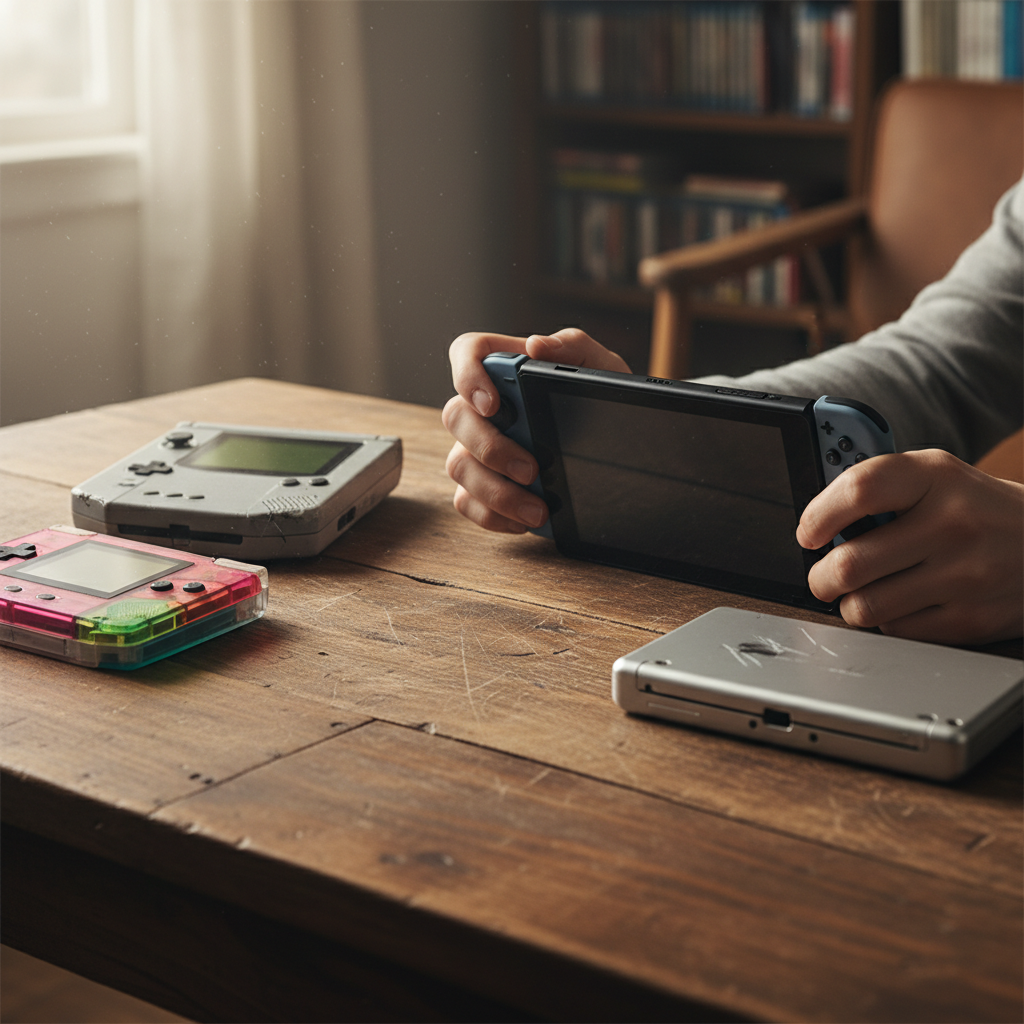
[image-1|retro-gaming-handhelds-diverse-collection|A diverse collection of retro handheld gaming consoles, showcasing various form factors and colors, on a vintage wooden desk with classic game cartridges scattered around. Overhead shot, warm lighting, editorial style, inviting atmosphere.|
Specific subject: A diverse collection of retro handheld gaming consoles, showcasing various form factors (vertical, horizontal, clamshell) and colors.
Relevant environment and context: Arranged neatly on a vintage wooden desk, with classic game cartridges (e.g., Game Boy, NES) scattered casually around them.
Defined angle and lighting: Overhead shot with warm, soft lighting.
Consistent visual style: Editorial, inviting, and nostalgic atmosphere.]
Why Choose a Handheld Game Console for Classic Gaming?
The decision to invest in a dedicated handheld for classic gaming often stems from a desire for a specialized experience that general-purpose devices simply cannot replicate. These consoles offer unique benefits that enhance the enjoyment of beloved retro titles. However, it’s also important to acknowledge their limitations to make an informed choice.
Advantages:
- Portability & Convenience: The most compelling reason is the ability to play your favorite classics on the go. These devices are designed for easy transport, fitting into pockets or bags, making commutes, travel, or quick breaks infinitely more entertaining. Imagine having thousands of games from your childhood literally in the palm of your hand.
- Specialized Gaming Experience: Dedicated hardware means dedicated controls. Accurate D-pads, responsive buttons, and comfortable ergonomics are paramount for retro games, which often rely on precise inputs. Many handhelds also feature screens optimized for retro aspect ratios and pixel-perfect scaling, sometimes with filters to emulate classic LCDs, offering an authentic visual experience that phones struggle to match.
- Vast Game Libraries: Through emulation, these handhelds unlock access to enormous catalogs of games spanning multiple console generations. From the simplest arcade titles to complex RPGs on the PlayStation or N64, a single device can become a gateway to virtually any classic game you can imagine.
|
Our Picks for the Best Handheld game console in 2026
As an Amazon Associate I earn from qualifying purchases.
|
||
| Num | Product | Action |
|---|---|---|
| 1 | R36MAX Retro Handheld Game Console, 4.0 Inch 720x720 IPS Screen, 64GB Built-in 18,000+ Classic Game, Portable Hand Held Open Source Linux System, 4000mAh Battery Retro Gaming Console(Black 64GB) |

|
| 2 | Handheld Game for Kids -Preloaded 220 Retro Video Games, Portable Gaming Player with Rechargeable Battery 3.0" LCD Screen, Mini Arcade Electronic Toy Gifts for Boys Girls (Blue) |
|
| 3 | Handheld Game for Kids -Preloaded 220 Retro Video Games, Portable Gaming Player with Rechargeable Battery 3.0" LCD Screen, Mini Arcade Electronic Toy Gifts for Boys Girls (Red) |
|
| 4 | R36MAX Retro Handheld Game Console, 4.0 Inch IPS HD Screen Portable Retro Gaming Console, 1.5GHz CPU Support 30+ Emulator Console Video Game Console, 4000mAh Battery (64GB Black) |
|
| 5 | Retro Handheld Game Console of Boy Portable Hand Held Video Games X9 Preloaded Wireless Juegos para Niños Stick TV Pixel Gaming for Kids Sf3000 Plug 'n' Play Drive Systems De Juegos Portátil |
|
| 6 | R36MAX Retro Handheld Game Console, 4.0 Inch 720x720 IPS Screen, 64GB Built-in 18,000+ Classic Game, Portable Hand Held Open Source Linux System, 4000mAh Battery Retro Gaming Console(White 64GB) |
|
| 7 | R36MAX Handheld Game Console - 4.0-Inch Screen, Support 22000+Classic Games,128G TF Card,Portable Console with Open Source System,4000mAh Battery,Birthday Gift for Adult or Partner - Black |
|
| 8 | RG56PRO Retro Handheld Game Console - 5.5 Inch IPS Screen,31000+ Classic 3D Games,5000mAh Battery, Open Linux System,Portable Console with 128G TF Card - Birthday Gift for Boyfriend (Black) |
|
| 9 | 32 Bit Handheld Games for Kids Preloaded 139 Video Games, Portable Video Gaming Player with 3.0" IPS Screen and Rechargeable Battery, Mini Travel Games Electronic Gifts Toys for Boys Girls, Blue |
|
| 10 | ASUS ROG Xbox Ally – 7” 1080p 120Hz Touchscreen Gaming Handheld, 3-month Xbox Game Pass Premium included, AMD Ryzen Z2 A, 16GB RAM, 512GB SSD, White |
|
Disadvantages:
- Cost Variation: While many retro handhelds are budget-friendly, capable devices for higher-end emulation or those with premium features can range from moderately priced to as expensive as modern consoles or even full-fledged handheld PCs. Determining your budget is a crucial first step.
- Performance Limits: Not all handhelds are created equal. Cheaper models might flawlessly run 8-bit and 16-bit games but struggle with more demanding systems like the Nintendo 64, Dreamcast, PSP, or PlayStation 2, leading to slowdowns or graphical glitches. It’s essential to match the device’s power to the systems you primarily wish to emulate.
- Learning Curve: Setting up emulation and custom firmware can sometimes require a degree of technical comfort. While many devices are increasingly user-friendly, optimizing performance, sourcing game ROMs (ethically and legally), and installing community-developed operating systems might be a barrier for some users who prefer a completely plug-and-play experience.
Popular Types of Handheld Game Consoles for Classic Gaming
The market for classic gaming handhelds is incredibly diverse, offering something for every preference and budget. They generally fall into categories based on their primary function, form factor, and performance capabilities. Understanding these types will help narrow down the best choice for you.
Dedicated Retro Handhelds (Emulators):
These are purpose-built devices designed almost exclusively for emulation. They come in various form factors and power levels.
- Anbernic Series (e.g., RG Cube, RG35XX, RG28XX): Anbernic is a prominent brand known for its wide range of retro handhelds. The Anbernic RG Cube is praised as a top pick for 2026, offering a sturdy build, solid battery life, and the ability to run a wide array of systems from NES to PS2 and DS, despite its unique square screen. Devices like the Anbernic RG28XX and RG35XX Pro/Plus are excellent budget-friendly options, perfect for casual play and excelling at 8-bit, 16-bit, and PlayStation 1 titles. They often feature various ergonomic designs, including horizontal and vertical orientations, and are celebrated for their build quality relative to their price.
- Retroid Pocket Series (e.g., RP6, RP5, RP Flip 2): Retroid devices consistently rank high for their quality and competitive pricing. The Retroid Pocket 6 stands out as an excellent all-around performer, capable of perfect performance on PS2, GameCube, and older systems, often even handling some modern PC and Switch games well. These Android-based handhelds boast high-resolution, high-refresh-rate AMOLED screens and premium controls. The Retroid Pocket 5 is also a strong contender for the 1996–2005 era, powered by a Snapdragon 865 and 8GB RAM. The Retroid Pocket Flip 2 offers a nostalgic clamshell design, running both Android and Linux, and is powerful enough for PS2 emulation. These devices typically offer robust performance but may require a more involved setup process.
- Miyoo Mini Plus: Often hailed as the best retro handheld for beginners or those on a strict budget, the Miyoo Mini Plus is incredibly portable and excels at playing older consoles like the Game Boy lineup and PlayStation 1 flawlessly. Its small, vibrant 3.5-inch IPS screen makes retro games look amazing, and its controls are stellar. The community-supported custom firmware, OnionOS, significantly enhances its user experience, making it feel like a device far beyond its modest price point.
- AYN Odin 2 Portal: For users seeking high performance to emulate more demanding systems, the AYN Odin 2 Portal offers a large 7-inch OLED display and a powerful Snapdragon 8 Gen 2 processor, making it capable of running a vast range of high-end retro games. While expensive, it delivers top-tier emulation capabilities.
Authentic Cartridge Players:
This niche category caters to purists who prefer playing original game cartridges on modern, high-quality hardware.
- Analogue Pocket: This premium device is considered the ultimate Game Boy experience, perfectly playing Game Boy, Game Boy Color, and Game Boy Advance cartridges. It features an incredible screen with convincing filters to emulate classic LCDs, excellent build quality, and can be connected to a TV with an optional dock. Adapters expand its compatibility to other cartridge-based systems, offering an authentic, high-fidelity retro experience for collectors.
Handheld PCs for Emulation (e.g., Steam Deck, Asus ROG Ally X, Lenovo Legion Go 2):
These powerful devices are essentially portable computers in a handheld form factor, offering immense flexibility for emulation alongside modern PC gaming.
- Steam Deck OLED / Asus ROG Ally X / Lenovo Legion Go 2: These devices are fully functional PCs with strong integrated graphics. They can download classic games directly through platforms like Steam or run various emulation software on their Windows or SteamOS operating systems. While highly capable of running any emulator, they are generally larger, heavier, more expensive, and have a stronger focus on modern PC gaming, making them less “dedicated retro” but incredibly versatile.
Comparing Handheld Game Consoles for Classic Gaming
When choosing a handheld, understanding the key specifications and features of popular models is crucial. This table offers a concise comparison to highlight their differences and help you align a device with your classic gaming preferences.
| Feature | Miyoo Mini Plus | Anbernic RG Cube | Retroid Pocket 6 | Analogue Pocket | Steam Deck OLED |
|---|---|---|---|---|---|
| CPU/GPU | Entry-level ARM | Mid-range ARM (e.g., Rockchip) | High-end ARM (Snapdragon 8 Gen 2) | Custom FPGA | AMD APU (Zen 2 CPU / RDNA 2 GPU) |
| RAM | 128MB-512MB | 1GB-2GB | 4GB-8GB | 64MB-128MB | 16GB LPDDR5 |
| Storage | microSD Card | microSD Card | eMMC + microSD Card | microSD Card | 512GB-1TB NVMe SSD |
| Screen | 3.5″ IPS (640×480) | Square IPS (e.g., 720×720) | 5.5″ AMOLED (1080p+, 120Hz) | 3.5″ LCD (1600×1440) | 7.4″ OLED (1280×800, 90Hz) |
| Battery Life | 4-6 hours | 6-8 hours | 7-10+ hours | 6-10 hours | 3-12 hours (game dependent) |
| Operating System | Linux (OnionOS recommended) | Linux (ArkOS/Android optional) | Android 13/14 | Proprietary (AnalogueOS) | SteamOS (Linux-based) |
| Emulation Capability | NES, SNES, GB, GBA, PS1 (flawless) | NES, SNES, PS1, up to PS2/DS (good) | PS1, PS2, GameCube, Wii, some Switch/PC (excellent) | Native GB/GBC/GBA cartridges; adapters for other cart systems | All systems (PC games too) |
| Price Range | $50 – $80 | $100 – $150 | $150 – $250 | $220 – $250 | $500 – $700+ |
| Form Factor | Vertical | Horizontal (square screen) | Horizontal | Vertical | Horizontal |
Buying Guide: How to Choose the Right Handheld Game Console for Classic Gaming
Selecting the perfect handheld for classic games involves a thoughtful assessment of your personal gaming habits and preferences. It’s not just about the most powerful device, but the one that best suits your specific needs.
Identify Your Usage Needs:
- What Classic Systems Do You Want to Play? This is the most critical question.
- For 8-bit (NES, Master System) and 16-bit (SNES, Genesis, Game Boy) games, a budget-friendly option like the Miyoo Mini Plus or Anbernic RG35XX series will be more than sufficient.
- If you’re aiming for PlayStation 1, Nintendo 64, or Dreamcast, you’ll need a mid-range device like the Anbernic RG Cube or Retroid Pocket 5.
- For more demanding systems like PlayStation 2, GameCube, PSP, or Nintendo DS, a higher-performance Android handheld such as the Retroid Pocket 6 or AYN Odin 2 Portal, or even a handheld PC, becomes necessary.
- Emulation vs. Original Cartridges? If you have a cherished collection of Game Boy or Game Boy Advance cartridges and seek an authentic, premium experience, the Analogue Pocket is your unparalleled choice. For everyone else, emulation-based handhelds offer vast digital libraries.
- Portability Preferences? Consider the physical size and form factor. Smaller, vertical handhelds like the Miyoo Mini Plus are incredibly pocketable. Larger horizontal devices like the Retroid Pocket 6 or Steam Deck offer more comfortable ergonomics for extended play but are less discreet. Do you prefer a clamshell design like the Retroid Pocket Flip 2 for screen protection?
- What is Your Budget? Handhelds range from under $50 to over $1000. Clearly define how much you are willing to spend, as this will largely dictate the performance and features available to you.
Key Factors to Consider:
- Performance: The CPU, GPU, and RAM determine which systems a handheld can emulate smoothly. More powerful chipsets are needed for more recent retro systems (PS2, GameCube).
- Screen Quality:
- Size and Resolution: Smaller screens are great for portability; larger screens enhance immersion. Higher resolutions make games look crisp, but also consider native aspect ratios for retro titles.
- Panel Type: IPS panels offer good viewing angles; OLED screens (like on the Retroid Pocket 6 or Steam Deck OLED) provide superior contrast and vibrant colors, making older games pop.
- Aspect Ratio: Some handhelds offer a 4:3 aspect ratio display, which is ideal for many classic consoles, avoiding black bars.
- Battery Life: Crucial for extended gaming sessions on the go. Look for devices offering 5+ hours, with higher-end models often reaching 8-10 hours or more.
- Build Quality & Ergonomics: A comfortable device with responsive, tactile buttons and a good D-pad is vital for retro gaming. Look for sturdy construction that feels good in your hands.
- Operating System & Custom Firmware: Devices running Linux (often with custom firmware like OnionOS or ArkOS) are typically more straightforward for pure emulation. Android-based handhelds offer greater versatility, allowing you to install various emulators, streaming apps, and even some Android games, though they might require more initial setup.
- Connectivity: Wi-Fi is essential for updates and online features. Bluetooth allows for external controllers or headphones. HDMI output is a bonus if you want to connect your handheld to a TV for a big-screen retro experience.
- Game Library & Setup: Some handhelds come with pre-loaded games (check legality). Others require you to source and load ROMs onto an SD card yourself. Consider the ease of adding and managing your game collection.
Top Picks: Best Handheld Game Consoles for Classic Gamers Today
Navigating the vast array of options can be daunting, but a few devices consistently stand out as excellent choices for classic gamers, categorized by their strengths.
- Best Overall for Versatility (Mid-High Range): Retroid Pocket 6. This device strikes an impressive balance between performance, features, and price. Running on Android with a powerful Snapdragon chip, it excels at emulating systems up to PlayStation 2, GameCube, and even some modern titles, all displayed on a gorgeous, high-refresh-rate AMOLED screen. Its excellent build quality and extensive community support make it a fantastic all-rounder.
- Best for Authentic Cartridge Play (Premium): Analogue Pocket. If you own a collection of original Game Boy, Game Boy Color, or Game Boy Advance cartridges and demand the most authentic, high-fidelity experience, the Analogue Pocket is unmatched. Its custom FPGA hardware and stunning display perfectly recreate the original feel, making it a collector’s dream.
- Best Budget Pick for Early Retro (Entry-Level): Miyoo Mini Plus. For those new to retro handhelds or on a tight budget, the Miyoo Mini Plus offers incredible value. It’s ultra-portable, remarkably affordable, and flawlessly handles 8-bit, 16-bit, and PlayStation 1 games. Paired with the custom OnionOS firmware, it provides an intuitive and enjoyable experience that defies its price tag.
- Best for Higher-End Emulation & PC Games (High-End): Steam Deck OLED / Asus ROG Ally X. If your classic gaming ambitions extend to more recent consoles like PS2, GameCube, or even original Xbox titles, and you also want the flexibility to play modern PC games, these handheld PCs are exceptionally powerful. While more expensive and larger, they offer unparalleled performance and versatility for any type of gaming.
- Best New Contender (Mid-Range): Anbernic RG Cube. Emerging as a top pick for 2026, the Anbernic RG Cube offers a compelling blend of retro and modern. Its robust build, solid battery life, and ability to handle games up to PS2 and DS, despite its unique square screen, make it a strong contender for those looking for a fresh, capable option.
Tips and Tricks for Using Your Classic Gaming Handheld
Getting the most out of your classic gaming handheld often goes beyond just loading games. A few simple tips and tricks can significantly enhance your experience.
- Optimizing Performance and Battery: Explore your device’s settings. For Android handhelds, consider performance modes or undervolting if available. For Linux-based systems, custom firmware often includes optimization tools. Dimming the screen, reducing Wi-Fi/Bluetooth usage when not needed, and using power-saving modes can extend battery life.
- Managing Game Libraries: Organize your game ROMs into clearly labeled folders by system. This makes browsing and selecting games much easier. Many custom firmwares also offer robust library management features, including scraping artwork and game descriptions. Ensure your SD card is high-quality and appropriately sized for your collection.
- Connectivity: If your handheld supports HDMI output, connect it to your TV for a big-screen retro experience. Pair Bluetooth controllers for multiplayer fun or use Bluetooth headphones for immersive audio without disturbing others. Many devices can also connect to Wi-Fi for updates or online multiplayer in supported emulators.
- Troubleshooting Common Issues: If games run slowly, check emulator settings like resolution, frameskip, and rendering backend. Ensure your firmware is up to date, as updates often include performance improvements and bug fixes. Consult online communities (like Reddit’s r/SBCGaming) for device-specific advice and solutions to common problems.
Essential Accessories for Classic Gaming Handhelds
Enhancing your classic gaming experience can be as simple as adding the right accessories. These items protect your device, improve gameplay, and expand its functionality.
- Screen Protectors & Cases: Given the portable nature of these devices, a screen protector is crucial to guard against scratches, while a protective case safeguards against drops and bumps during travel.
- High-Quality SD Cards: Most retro handhelds rely heavily on microSD cards for storing games and firmware. Investing in a reputable, high-speed card (e.g., U3/V30) is vital for smooth game loading and overall performance.
- External Controllers: For multiplayer sessions or when connected to a TV, a comfortable Bluetooth controller can significantly improve the experience. Some handhelds even come with docks to facilitate this.
- Docks/HDMI Cables: If your device supports video output, an HDMI cable or a dedicated dock allows you to connect it to a larger display, transforming your portable into a home console.
- Headphones: Whether wired or wireless, a good pair of headphones enhances immersion, allowing you to fully appreciate the classic soundtracks and sound effects without distractions.
Conclusion
Choosing the best handheld game console for classic gamers is a personal journey, deeply intertwined with the nostalgia you seek and the specific retro eras you wish to revisit. From budget-friendly marvels that perfectly capture the essence of 8-bit and 16-bit gaming, to high-performance machines capable of emulating complex 3D worlds, and even premium devices that breathe new life into original cartridges, the options are richer than ever. The key lies in aligning your expectations, desired game libraries, and budget with the right device’s capabilities.
Ultimately, the best handheld isn’t just a gadget; it’s a time machine, allowing you to carry a piece of gaming history in your pocket and share those timeless experiences wherever you go. Which classic game are you most excited to replay on your new portable console?
Frequently Asked Questions
What makes a handheld “good for classic gamers”?
A good handheld for classic gamers typically features accurate physical controls, an optimized display for retro aspect ratios, robust emulation performance for a wide range of older systems, and often supports custom firmware for enhanced user experience. It’s about delivering an authentic and enjoyable vintage gaming experience on the go.
Can I play my old Game Boy cartridges on these handhelds?
While most retro handhelds rely on emulation of digital game files, some premium devices like the Analogue Pocket are specifically designed to play original Game Boy, Game Boy Color, and Game Boy Advance cartridges, offering a truly authentic experience for collectors.
Do I need a powerful handheld for retro games?
It depends on the “retro” games you want to play. For 8-bit, 16-bit, and PlayStation 1 titles, many affordable handhelds suffice. However, for more demanding systems like Nintendo 64, Dreamcast, PlayStation Portable, or PlayStation 2, you’ll need a device with a more powerful processor and more RAM to ensure smooth performance.
What is custom firmware, and why is it important for retro handhelds?
Custom firmware (e.g., OnionOS, ArkOS) is community-developed software that replaces or enhances the stock operating system of a retro handheld. It often improves performance, adds features like better library management, saves states, fast-forward options, and expands compatibility, making the device much more user-friendly and powerful.
Are these handhelds legal?
The legality generally depends on the source of your games. Owning the physical game cartridges or legally purchased digital versions and then creating backup ROMs for personal use is usually permissible. Distributing or downloading ROMs for games you do not own can be illegal and infringes on copyright.
Can I connect these handhelds to a TV?
Many retro handheld consoles, especially mid-range and high-end models, feature an HDMI output port, allowing you to connect them to a television or monitor. This transforms the portable device into a mini-console, perfect for playing classic games on a larger screen, often with external Bluetooth controllers.
What is the difference between an Android handheld and a Linux handheld for retro gaming?
Linux-based handhelds are typically more focused on pure emulation, often simpler to use, and excellent for older systems. Android handhelds offer more versatility, allowing for various emulators, streaming services, and Android games, but may require more initial setup and can sometimes be more complex to optimize.