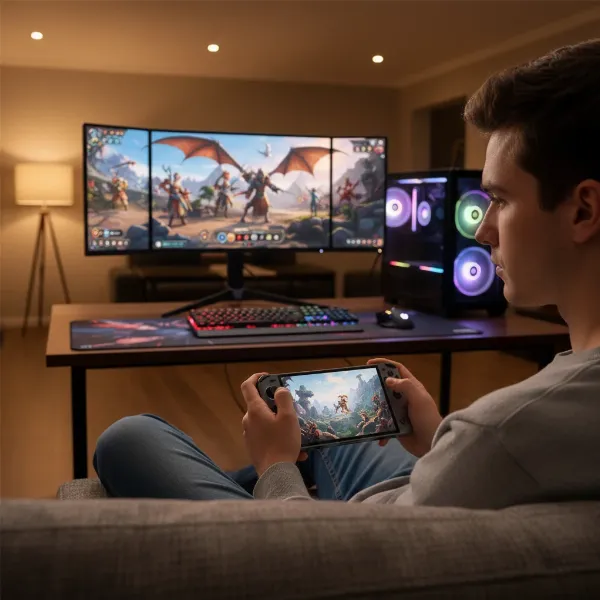
Have you ever wished you could take your expansive game library with you, transitioning seamlessly from your living room to a long commute or a cozy corner in your home? Handheld game consoles are making a powerful resurgence, evolving from simple devices to robust machines capable of playing the latest AAA titles on the go. This guide cuts through the noise, offering an in-depth look at the pros, cons, and top picks in today’s dynamic handheld gaming landscape, helping you make an informed decision that perfectly suits your gaming lifestyle.
What is a Handheld Game Console?
A handheld game console is a portable electronic device specifically designed for playing video games, typically featuring a built-in screen, speakers, and game controls. These devices have a rich history, dating back to the 1970s with early electronic games, and gaining mainstream popularity with iconic systems like the Nintendo Game Boy and Sony PSP. Unlike smartphones or tablets that offer gaming as one of many functions, handheld consoles prioritize a dedicated gaming experience, often boasting specialized physical controls and optimized software. The latest generation of handhelds often feature a hybrid design, allowing them to function as both portable units and traditional consoles by connecting to a TV for a larger screen experience.
Why Choose a Handheld Game Console?
The appeal of handheld gaming lies in its unique blend of convenience and specialized performance. Understanding the advantages and disadvantages is crucial for deciding if a portable powerhouse is right for you.
Advantages of Handheld Game Consoles
- Unrivaled Portability and Convenience: The primary draw of handheld consoles is their ability to deliver gaming experiences anywhere you desire. Whether you’re traveling, taking a lunch break, relaxing in bed, or enjoying the outdoors, these devices offer unparalleled flexibility for on-the-go entertainment.
- Dedicated Gaming Experience: Unlike general-purpose mobile devices, handheld consoles are purpose-built for gaming. This translates to optimized hardware, specialized controls (buttons, joysticks, D-pads), and software tailored to gaming, providing a more immersive and precise experience than touchscreens often can.
- Access to Exclusive Game Libraries: Platforms like the Nintendo Switch boast a rich catalog of first-party exclusive titles that cannot be played anywhere else. Additionally, modern handheld PCs grant access to vast PC game libraries, including many AAA games.
- A Perfect Blend of Performance and Mobility: Today’s handhelds offer a surprising level of performance, allowing users to play graphically intensive games that rival traditional consoles, but with the added benefit of portability. Cloud gaming, especially with the advent of 5G networks, further enhances this by enabling high-end gaming on more compact devices without requiring top-tier local hardware.
- Nostalgia and Retro Gaming: For many, handheld consoles evoke a powerful sense of nostalgia, harkening back to classic Game Boy or PSP days. The thriving market for retro handhelds specifically caters to this, allowing players to relive cherished gaming memories.
|
Our Picks for the Best Handheld game console in 2026
As an Amazon Associate I earn from qualifying purchases.
|
||
| Num | Product | Action |
|---|---|---|
| 1 | ASUS ROG Xbox Ally – 7” 1080p 120Hz Touchscreen Gaming Handheld, 3-month Xbox Game Pass Premium included, AMD Ryzen Z2 A, 16GB RAM, 512GB SSD, White |

|
| 2 | Handheld Game for Kids -Preloaded 220 Retro Video Games, Portable Gaming Player with Rechargeable Battery 3.0" LCD Screen, Mini Arcade Electronic Toy Gifts for Boys Girls (Blue) |
|
| 3 | 32 Bit Handheld Games for Kids Preloaded 139 Video Games, Portable Video Gaming Player with 3.0" IPS Screen and Rechargeable Battery, Mini Travel Games Electronic Gifts Toys for Boys Girls, Blue |
|
| 4 | R36MAX Retro Handheld Game Console, 4.0 Inch 720x720 IPS Screen, 64GB Built-in 18,000+ Classic Game, Portable Hand Held Open Source Linux System, 4000mAh Battery Retro Gaming Console(Black 64GB) |
|
| 5 | RG56PRO Retro Handheld Game Console - 5.5 Inch IPS Screen,31000+ Classic 3D Games,5000mAh Battery, Open Linux System,Portable Console with 128G TF Card - Birthday Gift for Boyfriend (Black) |
|
| 6 | R36MAX Handheld Game Console - 4.0-Inch Screen, Support 22000+Classic Games,128G TF Card,Portable Console with Open Source System,4000mAh Battery,Birthday Gift for Adult or Partner - Black |
|
| 7 | R36MAX Retro Handheld Game Console, 4.0 Inch 720x720 IPS Screen, 64GB Built-in 18,000+ Classic Game, Portable Hand Held Open Source Linux System, 4000mAh Battery Retro Gaming Console(White 64GB) |
|
| 8 | Retro Handheld Game Console of Boy Portable Hand Held Video Games X9 Preloaded Wireless Juegos para Niños Stick TV Pixel Gaming for Kids Sf3000 Plug 'n' Play Drive Systems De Juegos Portátil |
|
| 9 | Handheld Game for Kids -Preloaded 220 Retro Video Games, Portable Gaming Player with Rechargeable Battery 3.0" LCD Screen, Mini Arcade Electronic Toy Gifts for Boys Girls (Red) |
|
| 10 | R36MAX Retro Handheld Game Console, 4.0 Inch IPS HD Screen Portable Retro Gaming Console, 1.5GHz CPU Support 30+ Emulator Console Video Game Console, 4000mAh Battery (64GB Black) |
|
Disadvantages of Handheld Game Consoles
- Limited Battery Life: Despite technological advancements, battery life remains a frequent concern for handheld gamers, particularly when playing demanding titles. Extended gaming sessions often necessitate carrying a power bank to avoid interruptions.
- Performance Compromises Compared to High-End PCs: While powerful, handhelds generally cannot match the raw graphical fidelity or frame rates of high-end gaming PCs or home consoles. Players may need to accept lower resolutions, frame rates, or graphical settings, especially for the latest AAA games.
- Ergonomics and Control Limitations: While specialized, the compact nature of handhelds can sometimes lead to less comfortable ergonomics for very long sessions compared to full-sized controllers. Certain game genres, like real-time strategy or competitive first-person shooters, may still benefit from the precision and numerous inputs of a keyboard and mouse setup. Issues like “stick drift” can also be a frustration for some users.
- Screen Size Limitations: For some complex games or those with intricate details, the smaller screen of a handheld might feel restrictive. Conversely, for 2D platformers or simpler games, a smaller screen can be an advantage.
- Connectivity Challenges: Relying on Wi-Fi for online multiplayer can be problematic if you’re in an area with a weak or inconsistent signal, potentially disrupting the gaming experience.
- Higher Entry Price for Premium Models: While some budget-friendly options exist, the latest high-performance handheld PCs can come with a significant price tag, rivaling or exceeding that of dedicated gaming laptops.
“The surge in handheld gaming isn’t just about playing on the go; it’s about a dedicated, immersive experience that bridges the gap between traditional console gaming and ultimate portability.” – Dr. Anya Sharma, Gaming Technology Analyst
Handheld Game Console: A Comprehensive Guide
The handheld gaming market is flourishing, with new devices constantly pushing the boundaries of what’s possible in a portable form factor. From dedicated gaming systems to versatile mini PCs, there’s an option for every type of gamer.
What is a Handheld Game Console?
A handheld game console is a self-contained, portable electronic device specifically engineered for playing video games, featuring an integrated screen, speakers, and physical controls. These devices have evolved significantly since their inception, transitioning from basic single-game units to sophisticated machines that deliver high-fidelity gaming experiences. Unlike multi-purpose devices such as smartphones or tablets, handheld consoles are optimized for gaming performance, ergonomics, and often boast access to exclusive titles or ecosystems that enhance the player’s experience on the move. Modern iterations frequently incorporate hybrid designs, allowing them to dock and connect to external displays, blurring the lines between portable and home console gaming.
Why Choose a Handheld Game Console?
The decision to invest in a handheld game console often boils down to a desire for gaming flexibility without sacrificing depth or quality. These devices carve out a unique niche by offering specialized gaming performance in a compact, travel-friendly package.
Advantages of Handheld Game Consoles:
- Unmatched Portability and Convenience: The foremost advantage is the freedom to play your favorite games virtually anywhere—be it during a commute, on vacation, in different rooms of your home, or even outdoors. This “pick-up-and-play” nature is ideal for gamers with busy schedules or those who simply enjoy changing their gaming environment.
- Dedicated Gaming Experience: Handhelds are designed from the ground up for gaming, featuring ergonomic controls and interfaces optimized for immersive play that often surpasses the experience offered by touchscreen mobile gaming. This focused design minimizes distractions and enhances gameplay precision.
- Rich and Exclusive Game Libraries: Many handheld consoles, especially those from established manufacturers like Nintendo, offer exclusive titles that are not available on other platforms. This access to unique content is a significant draw, alongside growing support for vast PC game libraries on performance-focused handheld PCs.
- Hybrid Functionality: A defining feature of many contemporary handhelds is their ability to transform into a home console experience. By docking the device and connecting it to a television or monitor, players can enjoy their games on a larger screen, often with external controllers, providing versatility for both solo and social gaming.
Disadvantages of Handheld Game Consoles:
- Battery Life Limitations: Despite ongoing improvements, the intensive processing required for modern games often means shorter battery life compared to less demanding devices. For extended play sessions, carrying a portable charger is frequently a necessity.
- Performance vs. Price Trade-offs: While capable of playing demanding titles, handheld consoles generally cannot match the cutting-edge graphical fidelity or raw processing power of high-end gaming desktops or even some gaming laptops. Users might experience games at lower resolutions, frame rates, or with reduced graphical settings. Premium handheld PCs can also be quite expensive.
- Ergonomics and Control Considerations: The compact design, while great for portability, can sometimes lead to ergonomic challenges for certain hand sizes during prolonged gaming sessions. Additionally, for genres demanding high precision (like competitive shooters) or numerous inputs (like complex strategy games), traditional mouse and keyboard setups still hold an advantage.
- Screen Size and Visual Detail: The integrated screens, while often high-quality, are inherently smaller than a TV or monitor. This can impact the visibility of fine details in some games or make certain UI elements feel cramped.
Popular Handheld Game Consoles
The market offers a diverse range of handhelds, each catering to different preferences and budgets.
- Nintendo Switch (and Switch OLED/Lite): The Nintendo Switch family remains incredibly popular, known for its versatile hybrid design that allows seamless transition between handheld and docked TV play. Its exclusive lineup of beloved first-party games, including titles from franchises like Mario and Zelda, is a major draw. The Switch OLED model enhances the experience with a vibrant OLED screen and improved kickstand. The upcoming Nintendo Switch 2 is also highly anticipated, promising further enhancements.
- Steam Deck (OLED): Valve’s Steam Deck revolutionized portable PC gaming, offering a powerful Linux-based handheld capable of running a vast library of Steam games. The OLED model features an improved screen and battery life, making it an excellent choice for PC gamers seeking portability. It stands out for its customizability and robust Linux operating system (SteamOS).
- ASUS ROG Ally (X): As a high-performance Windows handheld, the ASUS ROG Ally series (including the newer Ally X) brings the full Windows gaming ecosystem to a portable form factor. These devices are praised for their powerful AMD processors, VRR (Variable Refresh Rate) displays, and ability to run demanding AAA titles natively. The Ally X boasts improved battery life and other enhancements.
- Lenovo Legion Go: The Legion Go stands out with its exceptionally large 8.8-inch QHD+ display and detachable controllers, offering a unique blend of handheld and tablet-like gaming. Its Windows OS allows access to various game launchers, and its flexible design provides diverse playstyles. A rumored Legion Go S running SteamOS aims to offer a mid-range option.
- MSI Claw (8 AI+): MSI’s entry into the handheld PC market, particularly the Claw 8 AI+, features Intel Core Ultra processors, positioning it as a strong contender for those who prefer Intel’s architecture. The Claw 8 AI+ is noted for its impressive battery life and robust performance for AAA gaming on the go.
- AYANEO Series: AYANEO offers a premium line of Windows-based handheld PCs, known for their sleek designs, high-quality screens, and powerful hardware. Models like the AYANEO Odin 2 Mini are particularly praised for their processing power and excellent screens, capable of handling demanding Android games and emulation up to Switch titles. These devices target users seeking a high-end, feature-rich portable experience.
- Retro Handhelds (Retroid Pocket, Anbernic, Miyoo Mini Plus, Powkiddy, TRIMUI Smart Brick): This category focuses on emulating classic game consoles and handhelds. Brands like Retroid Pocket (e.g., Retroid Pocket 6, Retroid Pocket 5), Anbernic (e.g., RG35XX Plus), Miyoo, and Powkiddy offer a wide array of devices at various price points. They are celebrated for their authentic feel, dedicated controls, and ability to play games from systems like PS1, SNES, and Game Boy flawlessly.
So Sánh Các Dòng Handheld Game Console (Bảng)
Here’s a comparison of key specifications for some popular handheld game consoles, though specific configurations can vary.
| Feature | Nintendo Switch OLED | Steam Deck OLED | ASUS ROG Ally X | Lenovo Legion Go | MSI Claw 8 AI+ |
|---|---|---|---|---|---|
| Operating System | Proprietary Nintendo OS | SteamOS (Linux-based) | Windows 11 Home | Windows 11 Home | Windows 11 Home |
| CPU | Custom NVIDIA Tegra T239 | Semi-custom AMD APU | AMD Ryzen AI Z2 Extreme | AMD Ryzen Z1 Extreme | Intel Core Ultra 7 Series 2 |
| GPU | Integrated NVIDIA GPU | Integrated AMD RDNA 2 | AMD Radeon RDNA 3.5 | AMD Radeon RDNA 3 | Intel Arc 140V |
| RAM | 4GB LPDDR4X | 16GB LPDDR5 | 24GB LPDDR5 | 16GB LPDDR5X | 32GB LPDDR5X |
| Storage | 64GB (expandable) | 256GB / 512GB / 1TB (expandable) | 1TB NVMe SSD (expandable) | 512GB / 1TB (expandable) | 1TB / 2TB NVMe SSD (expandable) |
| Display | 7.0-inch OLED, 720p | 7.4-inch OLED, 1280×800 | 7.0-inch IPS, 1080p, 120Hz VRR | 8.8-inch IPS, 1600p, 144Hz | 8.0-inch IPS, 1200p, 120Hz |
| Battery Life | 4.5-9 hours | 3-12 hours | Improved (spec. not final) | ~3-8 hours | ~3-13 hours (gaming/non-gaming) |
| Connectivity | Wi-Fi, Bluetooth, USB-C | Wi-Fi, Bluetooth, USB-C | Wi-Fi 6E, Bluetooth 5.2, USB-C | Wi-Fi 6E, Bluetooth 5.2, USB-C | Wi-Fi 7, Bluetooth 5.4, USB-C |
| Approx. Price | $349 | $399 – $649 | $999.99 (Ally X) | $699 – $799 | $999+ |
Note: Prices and specifications are approximate and can vary based on region, retailer, and specific model configurations.
Buying Guide: How to Choose Handheld Game Console
Selecting the perfect handheld console involves a careful assessment of your gaming habits, preferences, and budget.
1. Define Your Needs:
- What games do you want to play?
- AAA PC games: You’ll need a powerful Windows handheld like the ROG Ally X, Steam Deck, Legion Go, or MSI Claw 8 AI+.
- Exclusive console titles: The Nintendo Switch is your primary choice.
- Indie games or retro emulation: Many modern handheld PCs excel here, but dedicated retro handhelds (Anbernic, Retroid Pocket) offer excellent value.
- What level of performance do you need? If 4K resolution and ultra settings are non-negotiable, even the most powerful handhelds will be a compromise. If you’re content with 720p/1080p at stable frame rates, you have many options.
- How important is portability? Some handhelds are lighter and more compact than others. If you’re constantly on the move, a smaller device might be preferable over a larger, heavier one.
- What is your budget? Prices range from under $100 for basic retro handhelds to over $1000 for premium PC handhelds.
2. Key Factors to Consider:
- Performance (CPU, GPU, RAM): These dictate which games you can run and at what settings. For modern AAA games, look for devices with powerful AMD Ryzen Z1/Z2 Extreme or Intel Core Ultra processors and ample RAM (16GB+).
- Display:
- Size: Larger screens (8+ inches) offer more immersion but reduce portability. Smaller screens (5-7 inches) are more compact.
- Resolution: 720p is common for retro handhelds and the base Switch, while 1080p or higher is standard for PC handhelds.
- Refresh Rate: Higher refresh rates (90Hz, 120Hz, 144Hz) provide smoother visuals, especially in fast-paced games.
- Panel Type: OLED screens (Steam Deck OLED, Switch OLED) offer superior contrast and vibrant colors compared to LCDs.
- Battery Life: Check advertised battery life, but be aware that real-world performance with demanding games can be significantly shorter. Many users find a power bank essential.
- Game Library & Ecosystem: Consider the ecosystem a device belongs to. Nintendo offers exclusive first-party titles. Steam Deck leverages your existing Steam library. Windows handhelds can access Steam, Epic Games, Xbox Game Pass, and more.
- Operating System: SteamOS is optimized for gaming but has a learning curve for other tasks. Windows offers maximum compatibility but can require more tweaking. Proprietary OS (Nintendo Switch) is simple but closed.
- Ergonomics and Controls: If possible, try holding the device. Consider button layout, joystick quality, and overall comfort, especially for extended play. Hall effect joysticks can mitigate stick drift issues.
- Storage: Modern games require significant storage. Look for ample internal storage (512GB+ SSD for PC handhelds) and expandable options (microSD card slot).
- Price: Balance features with your budget. The most expensive option isn’t always the best for your specific needs.
3. Advice for Different Users:
- Casual Gamers / Nintendo Fans: The Nintendo Switch OLED is an excellent choice for its ease of use, family-friendly games, and unique hybrid design.
- PC Gamers on the Go: The Steam Deck OLED offers incredible value and seamless integration with your Steam library. For maximum performance and Windows compatibility, consider the ASUS ROG Ally X or Lenovo Legion Go.
- Retro Enthusiasts / Budget-Conscious Players: Devices from Retroid Pocket, Anbernic, or Miyoo Mini Plus provide a fantastic and affordable way to enjoy classic games.
- High-End Performance Seekers: The ASUS ROG Ally X, MSI Claw 8 AI+, or AYANEO devices deliver top-tier performance for the most demanding games, albeit at a premium price.
Top Picks: Best Handheld Game Consoles Today
The handheld market is thriving with innovation. Here are some of the most highly-regarded devices available now:
- Best Overall / Most Powerful (Windows): ASUS ROG Ally X. With its potent AMD Ryzen Z2 Extreme processor, VRR display, and improved battery life, the Ally X offers a premium Windows gaming experience capable of handling the latest AAA titles with impressive fidelity.
- Best Value for PC Gaming: Steam Deck OLED. Valve’s Steam Deck OLED remains a champion for its superb value, stunning OLED screen, and seamless access to your Steam library. It’s a fantastic entry point for portable PC gaming.
- Best for Exclusive Games / Hybrid Play: Nintendo Switch OLED. The Switch OLED continues to be a top choice for its unique hybrid form factor, vibrant OLED screen, and unparalleled library of first-party exclusive titles. Its versatility from handheld to TV mode is unmatched.
- Best for Large Screen & Flexibility: Lenovo Legion Go. Featuring an expansive 8.8-inch display and detachable controllers, the Legion Go provides a versatile gaming experience that can adapt from a traditional handheld to a mini-tablet PC.
- Best High-End Intel Handheld: MSI Claw 8 AI+. For those preferring Intel architecture, the MSI Claw 8 AI+ stands out with its powerful Intel Core Ultra processor and exceptional battery life, making it a strong contender for premium portable gaming.
- Best for Retro Gaming: Retroid Pocket 6 / Anbernic RG35XX Plus. These dedicated retro handhelds offer excellent emulation performance for classic consoles up to PS1/PSP (Retroid Pocket) or even Dreamcast (some higher-end retro devices), providing an authentic nostalgic experience at an affordable price point.
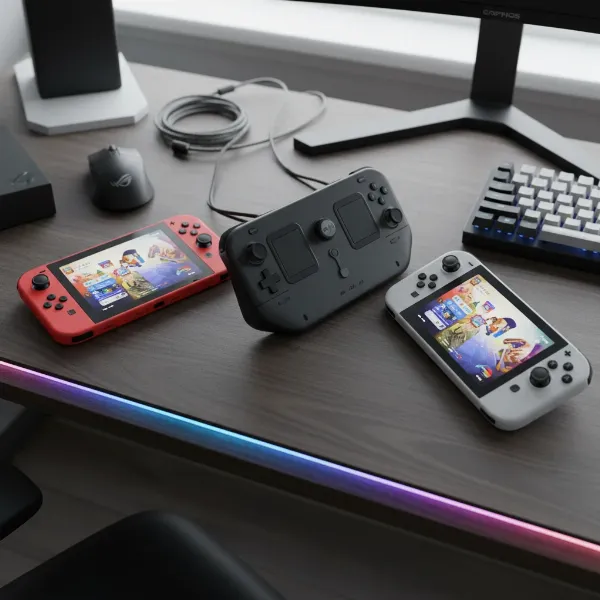 A side-by-side comparison of different handheld game consoles like Nintendo Switch, Steam Deck, and ROG Ally.
Tips and Tricks for Using Handheld Game Consoles
To maximize your handheld gaming experience, consider these essential tips and tricks:
- Optimize Performance and Battery Life: Most handheld PCs allow you to adjust resolution, graphical settings, and even TDP (Thermal Design Power) for the processor. Lowering these settings can significantly extend battery life and maintain smoother frame rates, especially for demanding games. Dedicated retro handhelds usually have power-saving options built-in.
- Manage Your Game Library Smartly: Invest in a high-speed microSD card (UHS-I or UHS-II) for expandable storage, especially for the Nintendo Switch or PC handhelds, which can quickly fill up with large game files. Regularly clear out games you’re not actively playing to free up space.
- Master Connectivity: Utilize your hybrid handheld’s ability to connect to a TV via a dock or USB-C hub for a big-screen experience. Experiment with external controllers for comfortable long-term play or for multiplayer sessions with friends. Ensure you have a stable Wi-Fi connection for online gaming, and consider wired Ethernet adapters for critical competitive play.
- Troubleshoot Common Issues:
- Battery Drain: Carry a portable power bank, adjust game settings, or enable power-saving modes.
- Stick Drift: For devices with replaceable joysticks, consider upgrading to Hall effect sensor joysticks, which are less prone to drift. Regular cleaning around the joystick base can also help prevent debris buildup.
- Overheating: Ensure adequate ventilation by not blocking vents. Using a stand can improve airflow. Monitor temperatures with built-in software if available.
- Protect Your Investment: A screen protector and a protective carrying case are essential accessories to guard against scratches, drops, and general wear and tear, keeping your device in pristine condition. Some users even opt for clear protective casings to keep their console clean from sweat and oils.
Handheld Game Console Accessories
Enhance your handheld gaming setup with these popular and often essential accessories:
- Portable Power Banks: Given the battery limitations of many handhelds, a high-capacity power bank is arguably the most crucial accessory. Look for one with Power Delivery (PD) to ensure fast charging for your device.
- Docks/Hubs: For hybrid consoles like the Nintendo Switch or PC handhelds, a dock or USB-C hub allows you to connect to a TV or monitor, charge the device, and often add USB ports for peripherals like external hard drives or wired controllers.
- MicroSD Cards: Essential for expanding storage on most handhelds, especially if you plan to download many digital games. Choose a reputable brand with high read/write speeds for optimal game loading times.
- Protective Cases and Screen Protectors: Shield your device from drops, scratches, and dust. A tempered glass screen protector is highly recommended.
- External Controllers: For PC handhelds, a comfortable Bluetooth or wired controller can significantly improve the experience when playing on a TV. For Nintendo Switch, Pro Controllers are popular for ergonomic comfort.
- Gaming Headphones/Earbuds: High-quality audio enhances immersion. Wireless earbuds (Bluetooth) or wired headphones offer a private listening experience, crucial for gaming in public spaces.
- Ergonomic Grips: Some third-party grips can be attached to handhelds to improve comfort during long play sessions, making the device feel more substantial and easier to hold.
- Cleaning Kits: Keep your screen and controls free from dust, smudges, and oils with specialized cleaning cloths and solutions.
Conclusion
The handheld game console market is in a vibrant new era, delivering experiences that range from nostalgic retro gaming to cutting-edge AAA titles on the go. The industry is experiencing significant growth, driven by technological advancements in graphics, battery life, and the integration of cloud gaming. While portable consoles offer unparalleled convenience and dedicated gaming experiences, understanding potential trade-offs in battery life and raw performance is key to making an informed choice. With options ranging from the versatile Nintendo Switch to powerful PC handhelds like the Steam Deck and ROG Ally X, there’s a perfect handheld game console waiting to elevate your play. What gaming adventures will you embark on first with your new portable companion?
Câu Hỏi Thường Gặp
What is the difference between a handheld game console and a gaming phone?
Handheld game consoles are purpose-built for gaming, featuring dedicated physical controls, optimized cooling, and specialized operating systems or ecosystems. Gaming phones are smartphones with enhanced specs for gaming, but primarily function as phones, often relying on touch controls or clip-on accessories. The dedicated design of a handheld typically offers a superior, more ergonomic gaming experience.
Can handheld game consoles play PC games?
Yes, many modern handheld game consoles, often referred to as “handheld gaming PCs” (like the Steam Deck, ASUS ROG Ally, Lenovo Legion Go, and MSI Claw), run on Windows or a Linux-based OS like SteamOS, allowing them to play a vast majority of PC games from platforms like Steam, Epic Games, and Xbox Game Pass. Performance varies based on the device’s hardware.
How long does the battery typically last on a handheld game console?
Battery life varies significantly depending on the console model and the intensity of the game being played. For demanding AAA titles, modern handheld PCs might offer 1.5 to 3 hours of gameplay, while less intensive games or older consoles could last 5-10 hours or more. Portable power banks are often recommended for extended sessions.
Are handheld game consoles good for travel?
Handheld game consoles are excellent for travel due to their portability and ability to offer engaging entertainment without needing a TV or internet connection for offline games. They provide a dedicated gaming experience that can make long journeys or downtime much more enjoyable.
What is “stick drift” and how can it be prevented?
Stick drift is when a joystick registers input even when it’s not being touched, causing characters or cursors to move unintentionally. It’s often caused by wear or debris. Some newer handhelds use “Hall effect” joysticks, which use magnets to detect position and are less prone to drift. Regular cleaning and avoiding harsh use can help, but sometimes replacement parts are needed.