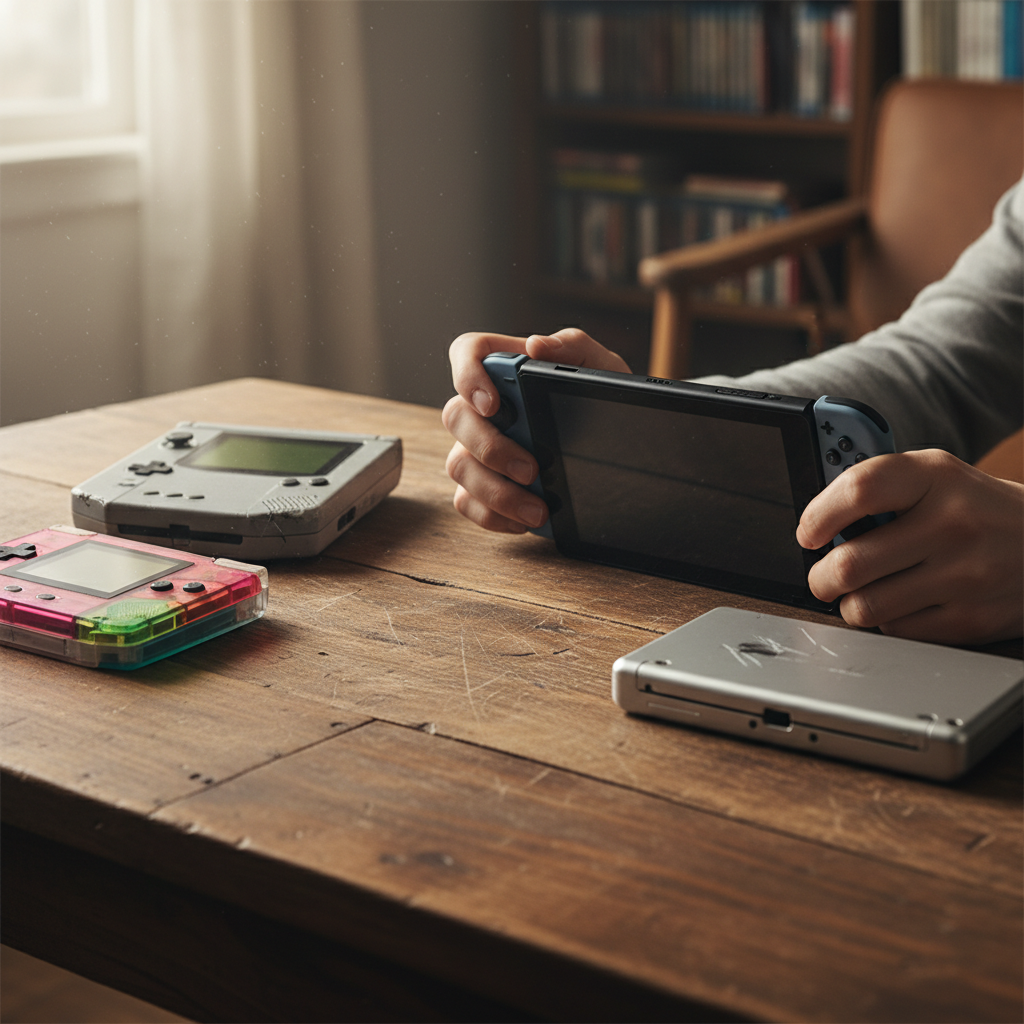
The world of gaming has never been more portable or powerful. For over a decade, enthusiasts have witnessed the incredible evolution of handheld game consoles, transforming from simple, pixelated diversions into sophisticated machines capable of running demanding AAA titles. This guide aims to navigate the diverse landscape of modern handhelds, offering precise and useful information to help you select the perfect device to match your gaming preferences and budget. Whether you’re a seasoned gamer or new to the portable scene, understanding the latest trends and the unique strengths and weaknesses of each system is key to making an informed choice.
What is a Handheld Game Console?
A handheld game console is a compact, self-contained electronic device designed exclusively for playing video games. Unlike traditional home consoles that connect to a television, a handheld integrates its own screen, controls, speakers, and internal hardware into a single, portable unit. This design allows players the freedom to enjoy their favorite games virtually anywhere, without being tethered to a fixed setup.
The concept of portable gaming dates back to the 1970s, with devices like Mattel’s Auto Race (1976) marking the early days of electronic handheld games. However, it was Nintendo’s Game Boy, released in 1989, that truly revolutionized and popularized the handheld market. Its robust design, impressive battery life, and compelling game library, including classics like Tetris, set the standard for generations to come. While early handhelds often featured monochrome displays and limited processing power, today’s devices boast vibrant, high-resolution screens and chipsets capable of delivering stunning graphics and complex gameplay.
Why Choose a Handheld Game Console?
Handheld game consoles offer a unique blend of convenience and dedicated gaming performance that other devices often cannot match. Understanding their advantages and disadvantages can help you determine if a portable system is the right choice for your lifestyle.
Advantages:
- Portability and Convenience: The primary appeal of handheld consoles is their unparalleled portability. Easily stashed in a bag or even a pocket, these devices allow you to pick up and play wherever you are—on a commute, during travel, or simply relaxing in a different room. This on-the-go flexibility transforms otherwise idle moments into engaging gaming sessions.
- Dedicated Gaming Experience: Unlike smartphones or tablets that serve multiple functions, handheld consoles are purpose-built for gaming. They feature ergonomic controls, dedicated buttons, and often more powerful hardware tailored for immersive gameplay, providing a superior experience compared to touch-screen alternatives.
- Exclusive Titles and Libraries: Many handhelds, particularly those from established manufacturers like Nintendo, boast extensive libraries of exclusive games that cannot be played on other platforms. This access to unique first-party titles can be a major draw for players seeking specific franchises or experiences.
- Versatility: Modern handhelds have evolved to offer diverse gaming opportunities. Some excel at retro emulation, bringing beloved classics back to life, while others are powerful enough to stream or natively run contemporary PC games, offering a vast array of genres and titles.
|
Our Picks for the Best Handheld game console in 2026
As an Amazon Associate I earn from qualifying purchases.
|
||
| Num | Product | Action |
|---|---|---|
| 1 | 32 Bit Handheld Games for Kids Preloaded 139 Video Games, Portable Video Gaming Player with 3.0" IPS Screen and Rechargeable Battery, Mini Travel Games Electronic Gifts Toys for Boys Girls, Blue |

|
| 2 | RG56PRO Retro Handheld Game Console - 5.5 Inch IPS Screen,31000+ Classic 3D Games,5000mAh Battery, Open Linux System,Portable Console with 128G TF Card - Birthday Gift for Boyfriend (Black) |
|
| 3 | R36MAX Retro Handheld Game Console, 4.0 Inch 720x720 IPS Screen, 64GB Built-in 18,000+ Classic Game, Portable Hand Held Open Source Linux System, 4000mAh Battery Retro Gaming Console(White 64GB) |
|
| 4 | Handheld Game for Kids -Preloaded 220 Retro Video Games, Portable Gaming Player with Rechargeable Battery 3.0" LCD Screen, Mini Arcade Electronic Toy Gifts for Boys Girls (Blue) |
|
| 5 | R36MAX Handheld Game Console - 4.0-Inch Screen, Support 22000+Classic Games,128G TF Card,Portable Console with Open Source System,4000mAh Battery,Birthday Gift for Adult or Partner - Black |
|
| 6 | Retro Handheld Game Console of Boy Portable Hand Held Video Games X9 Preloaded Wireless Juegos para Niños Stick TV Pixel Gaming for Kids Sf3000 Plug 'n' Play Drive Systems De Juegos Portátil |
|
| 7 | R36MAX Retro Handheld Game Console, 4.0 Inch IPS HD Screen Portable Retro Gaming Console, 1.5GHz CPU Support 30+ Emulator Console Video Game Console, 4000mAh Battery (64GB Black) |
|
| 8 | R36MAX Retro Handheld Game Console, 4.0 Inch 720x720 IPS Screen, 64GB Built-in 18,000+ Classic Game, Portable Hand Held Open Source Linux System, 4000mAh Battery Retro Gaming Console(Black 64GB) |
|
| 9 | ASUS ROG Xbox Ally – 7” 1080p 120Hz Touchscreen Gaming Handheld, 3-month Xbox Game Pass Premium included, AMD Ryzen Z2 A, 16GB RAM, 512GB SSD, White |
|
| 10 | Handheld Game for Kids -Preloaded 220 Retro Video Games, Portable Gaming Player with Rechargeable Battery 3.0" LCD Screen, Mini Arcade Electronic Toy Gifts for Boys Girls (Red) |
|
Disadvantages:
- Potentially Higher Cost: While some budget-friendly retro options exist, many high-performance handheld consoles can be a significant investment, often rivaling the price of home consoles or even entry-level gaming PCs. The cost can be a barrier for some prospective buyers.
- Performance Limitations: Despite advancements, even the most powerful handhelds typically cannot match the raw graphical fidelity or processing power of a high-end gaming PC or a current-generation home console. Players seeking uncompromised visual settings on the latest AAA games might find performance to be a limiting factor.
- Battery Life Concerns: Running demanding games on a compact, powerful device often comes at the expense of battery life. While optimizations are continuously made, intense gaming sessions can drain batteries quickly, requiring frequent recharging or reliance on portable power banks.
Popular Handheld Game Consoles
The handheld market is more vibrant and varied than ever, featuring a range of devices catering to different budgets and gaming preferences. From hybrid consoles to dedicated PC handhelds and retro emulation machines, there’s a portable system for nearly every type of gamer.
Nintendo Switch
The Nintendo Switch remains a dominant force, celebrated for its unique hybrid design that seamlessly transitions between a home console and a portable handheld. Its core appeal lies in its versatility and Nintendo’s rich library of exclusive first-party titles, which include beloved franchises like Super Mario, The Legend of Zelda, and Pokémon. The latest iteration, the Nintendo Switch 2, builds upon this legacy with significant upgrades. It offers support for 4K and 1440p resolution output in docked mode and 1080p at up to 120Hz in handheld mode, promising enhanced visuals for Nintendo games. While it features a spacious 7.9-inch LCD screen, it is notably larger than previous models.
- Pros: Unmatched versatility (handheld and TV mode), extensive and high-quality exclusive game library, intuitive and innovative Joy-Con controllers, strong family-friendly appeal, excellent haptic feedback.
- Cons: Performance may not match dedicated gaming PCs, Nintendo games can be expensive, battery life can be shorter compared to other Switch models depending on usage.
- Versions:
- Nintendo Switch (Original/V2): The standard model offering the full hybrid experience.
- Nintendo Switch OLED Model: Features a larger, more vibrant 7-inch OLED screen, improved kickstand, enhanced audio, and better battery life, making it ideal for handheld play.
- Nintendo Switch Lite: A compact, strictly handheld-only device with integrated Joy-Cons, designed for ultra-portability and budget-conscious gamers. It cannot connect to a TV.
- Nintendo Switch 2: The latest generation with enhanced graphics, backward compatibility, and an improved design, though it sacrifices some portability for power.
Steam Deck
Valve’s Steam Deck revolutionized portable PC gaming, offering a full-fledged PC experience in a handheld form factor. Running on SteamOS, it provides access to your entire Steam library, allowing you to play thousands of PC games on the go. The Steam Deck OLED model further refines this experience with a stunning display and improved internals.
- Pros: Access to a massive PC game library, highly customizable (can install Windows), vibrant 7-inch HDR OLED display with 90Hz refresh rate on the OLED model, comfortable ergonomics, excellent value for performance.
- Cons: Can be bulky for some users, performance varies significantly depending on the game, limited connectivity compared to some rivals, SteamOS may require tinkering for non-Steam games.
- Comparison with Switch: The Steam Deck offers superior raw performance for many graphically intensive games and the vastness of the PC library, while the Nintendo Switch excels with its first-party exclusives and hybrid functionality. The Steam Deck is generally larger and heavier.
ASUS ROG Ally / ROG Ally X
The ASUS ROG Ally series positions itself as a premium Windows gaming handheld, effectively putting a small gaming laptop in your hands. The ROG Ally X, in particular, boasts a powerful AMD AI Ryzen Z2 Extreme processor, 24GB of RAM, and a crisp 1080p 120Hz IPS display. It runs Windows 11, giving users the freedom to play any PC game or access any game streaming service available on a regular desktop.
- Pros: Exceptional performance for a handheld, full Windows ecosystem access, high-refresh-rate display, robust battery life (80Wh on Ally X), strong setting customization.
- Cons: Higher price point, Windows environment can be less optimized for touch-screen navigation than SteamOS, potentially less intuitive for console-focused gamers.
- Target Audience: Ideal for gamers who want uncompromising performance on the go and prefer the flexibility and extensive library of PC gaming without being limited to Steam.
AYANEO
AYANEO offers a range of high-performance handhelds, often running Android or Windows, catering to both modern gaming and extensive emulation. Devices like the AYANEO Odin 2 Mini are known for their powerful processors (e.g., Snapdragon 8 Gen 2), vibrant miniLED screens, and ability to handle demanding emulation, including Nintendo Switch titles.
- Pros: High-end performance, often sleek designs, strong for emulation and Android gaming, a variety of models for different needs.
- Cons: Can be very expensive, brand recognition is lower than mainstream competitors, software experience can vary.
- Target Audience: Enthusiasts looking for cutting-edge performance in a handheld, often with a focus on emulation or playing Android games with physical controls.
Other Notable Options
- Lenovo Legion Go S / Legion Go 2: These Windows-based handhelds offer large displays and often come with removable controllers, providing a versatile experience for both gaming and media consumption.
- Retroid Pocket Series: Excellent budget-friendly options, particularly for retro gaming enthusiasts. These Android-based devices offer great performance for older systems (e.g., PS1, N64, PSP) and even some lighter Switch emulation, at competitive prices.
- Anbernic & Powkiddy: These brands specialize in affordable retro emulation handhelds, offering a wide array of devices with various form factors and chipsets for nostalgic gaming.
- MSI Claw 8 AI+: An Intel-powered Windows handheld offering strong performance for AAA titles and improved battery life, though its software customization may be less extensive than rivals.
Comparing Popular Handheld Game Consoles
Choosing the right handheld often comes down to a detailed comparison of their core specifications, pricing, and ecosystem. The table below outlines key features of some of the most popular current-generation handheld game consoles.
| Feature | Nintendo Switch 2 | ASUS ROG Ally X | Steam Deck OLED |
|---|---|---|---|
| CPU | Octa-core ARM Cortex-A78C (Custom Nvidia Ampere) | AMD Ryzen AI Z2 Extreme | Custom AMD APU (“Aerith”) |
| GPU | Custom Nvidia Ampere | AMD Radeon RDNA 3.5 | RDNA 2 |
| RAM | 12GB LPDDR5 | 24GB LPDDR5X | 16GB LPDDR5 |
| Storage | 256GB (likely) | 1TB NVMe SSD (expandable) | Up to 1TB NVMe SSD (expandable) |
| Display | 7.9-inch LCD (1080p @ 120Hz handheld, 4K docked) | 7-inch IPS (1080p @ 120Hz, VRR) | 7.4-inch HDR OLED (1280×800 @ 90Hz) |
| Battery | TBD (shorter than other Switch models) | 80Wh | 50Wh |
| Operating System | Proprietary Nintendo OS | Windows 11 (with Xbox Full Screen Experience) | SteamOS 3.0 (Linux-based) |
| Game Library | Nintendo exclusives, Switch backward compatibility | PC games (Steam, Epic, Xbox Game Pass, etc.) | Steam library, Emulation, some non-Steam games |
| Connectivity | Wi-Fi, Bluetooth, USB-C | Wi-Fi 6E, Bluetooth 5.2, 2x USB-C (1x Thunderbolt) | Wi-Fi 6E, Bluetooth 5.3, USB-C |
| Price | Premium | High | Mid-range |
Buying Guide: How to Choose the Right Handheld Game Console
Selecting the ideal handheld game console involves a careful consideration of your personal gaming habits, performance expectations, and budget. With so many options available, a structured approach can help streamline your decision-making process.
Determine Your Usage Needs
Before diving into specifications, ask yourself a few key questions about how you intend to use the device:
- What types of games do you want to play? Are you interested in the latest AAA blockbusters, competitive online multiplayer, nostalgic retro titles, or indie gems? High-fidelity modern games demand more powerful hardware, while retro gaming can be enjoyed on more affordable devices.
- What level of performance do you require? Do you need maximum frame rates and graphics settings, or are you comfortable with compromises for portability? PC handhelds offer more power but also more complexity.
- How important is portability? Do you need something truly pocketable for quick bursts of gaming, or is a larger device for longer, more immersive sessions acceptable? Some handhelds are significantly bulkier than others.
- What is your budget? Prices can range from under $100 for basic retro handhelds to over $1000 for high-end PC gaming machines. Define your spending limit early.
Key Factors to Consider
Once your needs are clear, evaluate these technical and experiential factors:
- Performance (CPU, GPU, RAM): These components dictate how well games run. For AAA titles, look for powerful AMD Ryzen or Intel Core processors, dedicated RDNA graphics, and at least 16GB of RAM. For retro or lighter indie games, less powerful specs will suffice.
- Display:
- Size: Larger screens (7-8 inches) offer more immersive experiences, while smaller screens (under 6 inches) enhance portability.
- Resolution: 720p (800p) is common for smaller screens and balances performance with visual clarity. 1080p offers sharper images but can be more demanding on hardware.
- Refresh Rate: Higher refresh rates (90Hz, 120Hz) result in smoother motion, especially beneficial for fast-paced games.
- Panel Type: OLED displays offer superior contrast, deeper blacks, and more vibrant colors than LCDs, significantly enhancing visual quality.
- Battery Life: Check the advertised battery life for different usage scenarios. Real-world performance can vary greatly depending on the game and settings. A larger battery capacity (measured in Wh) generally means longer playtimes.
- Game Library & Ecosystem:
- Nintendo: Exclusive titles (Mario, Zelda), family-friendly, intuitive.
- Steam Deck/PC Handhelds: Vast PC game libraries, flexibility, modding potential.
- Retro Handhelds: Focus on emulated classic systems.
- Operating System:
- Proprietary (e.g., Nintendo Switch OS): Simple, streamlined, curated game experience.
- SteamOS: Linux-based, optimized for Steam games, relatively user-friendly.
- Windows: Most versatile, full PC functionality, but can be less optimized for handheld touch interfaces.
- Android: Common for retro and mobile gaming handhelds, offers app ecosystem.
- Ergonomics and Controls: Comfort is crucial for extended play. Consider the button layout, joystick quality, trigger feel, and overall grip. Some devices offer detachable controllers for added flexibility.
- Price: Balance features and performance with your budget. Remember to account for accessories like cases, screen protectors, and external storage.
Advice for Different Users
- Casual Gamers / Families: The Nintendo Switch (especially the OLED model or Switch 2) is often the best choice due to its ease of use, family-friendly titles, and versatile play modes.
- PC Gamers on the Go: The ASUS ROG Ally X or Steam Deck OLED are ideal. The Ally X offers full Windows flexibility and raw power, while the Steam Deck OLED provides an optimized Steam experience at a slightly lower price point.
- Retro Gaming Enthusiasts: Devices like the Retroid Pocket series or Miyoo Mini Plus offer excellent performance for emulating classic consoles at very affordable prices.
- Performance Seekers / Tech Enthusiasts: High-end PC handhelds like the ROG Ally X or AYANEO models provide the most power but require a larger investment and some technical proficiency.
Top Picks: The Best Handheld Game Consoles Right Now
Based on performance, value, and overall user experience, these handheld consoles stand out in the current market.
- Best Overall / Premium Performance: ASUS ROG Ally X. This device merges the power of a gaming PC with the convenience of a handheld, delivering exceptional performance for modern AAA games thanks to its Ryzen AI Z2 Extreme processor, abundant RAM, and a high-refresh-rate display. It’s truly a no-compromise PC gaming experience on the go.
- Best Value for PC Gaming: Steam Deck OLED. Offering a superb HDR OLED screen, improved battery life, and access to a vast Steam library, the Steam Deck OLED presents an incredibly compelling package for PC gamers who prioritize a dedicated, optimized portable experience without the premium price tag of a full Windows handheld.
- Best for Exclusive Games & Hybrid Play: Nintendo Switch 2. While details are still emerging, the Nintendo Switch 2 is poised to build upon the original’s success with enhanced graphics, backward compatibility, and the unique flexibility of its hybrid design. Its exclusive first-party titles remain a cornerstone of its appeal.
- Best for Retro Gaming: Retroid Pocket 6. For those who cherish classic games, the Retroid Pocket 6 offers an excellent balance of performance, affordability, and ease of use, making it perfect for emulating a wide range of retro systems.
Tips and Tricks for Using Your Handheld Game Console
Maximizing your handheld gaming experience involves more than just playing games. A few tips and tricks can help you optimize performance, manage your library, and extend the life of your device.
- Optimize Performance and Battery Life:
- Adjust Settings: Lowering in-game graphics settings, resolution, or frame rate can significantly improve performance and extend battery life, especially on more demanding titles.
- Screen Brightness: Reducing screen brightness is one of the easiest ways to conserve battery power.
- Power Modes: Utilize your device’s different power profiles (e.g., Silent, Performance, Turbo) to match the game’s demands and battery needs.
- Close Background Apps: Ensure unnecessary applications are closed to free up RAM and CPU cycles.
- Install and Manage Games:
- Storage Management: Regularly check your storage. Delete games you’re not actively playing or offload them to an external drive if supported. Invest in a high-capacity microSD card or SSD if your device allows upgrades.
- Updates: Keep your system software and games updated to benefit from performance improvements, bug fixes, and new features.
- Connectivity and Peripherals:
- Docking: If your handheld supports it (like the Nintendo Switch or some PC handhelds), connect it to a TV or monitor for a big-screen experience at home.
- Bluetooth Accessories: Pair Bluetooth headphones, external controllers, or even a portable keyboard/mouse for enhanced usability.
- Cloud Saves: Utilize cloud saving features (Steam Cloud, Nintendo Switch Online) to back up your game progress and seamlessly transition between devices if you own multiple.
- Troubleshooting Common Issues:
- Restart: A simple restart can often resolve minor software glitches or performance issues.
- Check Connections: Ensure all cables and peripherals are securely connected.
- Consult Manuals/Online Forums: For persistent problems, refer to your device’s manual or search online communities for solutions, as many common issues have well-documented fixes.
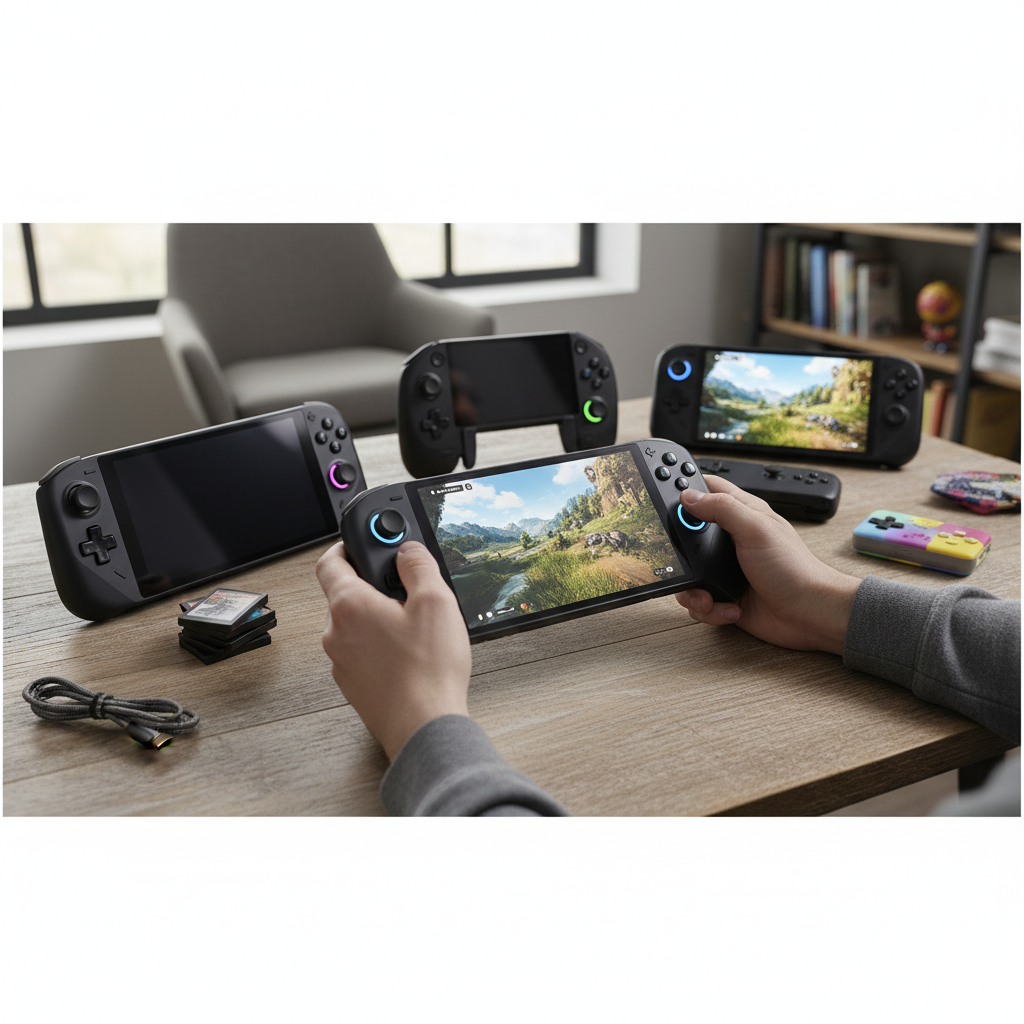
[image-1|modern-handheld-gaming-setup|A sleek, modern handheld gaming console on a desk, displaying a vibrant game, with a charging dock and wireless headphones nearby, capturing the essence of portable and immersive gaming.|
A close-up shot of a modern handheld game console, such as an ASUS ROG Ally X or Steam Deck OLED, sitting on a contemporary wooden desk. The screen is brightly illuminated with a dynamic, colorful video game scene. In the background, slightly out of focus, are a sleek charging dock for the console and a pair of minimalist wireless gaming headphones. The lighting is soft and ambient, highlighting the device’s premium feel. The style is realistic and editorial, emphasizing the sophisticated technology and comfort of modern handheld gaming.]
Handheld Game Console Accessories
Enhance your handheld gaming experience with a range of accessories designed for protection, expanded functionality, and improved comfort. Choosing the right add-ons can significantly elevate your play.
- Protective Gear:
- Carrying Cases: Essential for protecting your handheld from bumps, scratches, and spills while on the go. Look for cases with dedicated compartments for games, cables, and other small accessories.
- Screen Protectors: A tempered glass screen protector is highly recommended to guard against scratches and cracks, preserving the visual integrity of your display.
- Skins/Grips: Custom skins add a personal touch and can provide extra grip, while snap-on grips can improve ergonomics for users with larger hands.
- Storage Expansion:
- MicroSD Cards: For consoles like the Nintendo Switch and many retro handhelds, a high-speed microSD card is crucial for expanding your game library. Prioritize cards with fast read/write speeds.
- External SSDs (for PC Handhelds): Some PC-based handhelds allow for internal SSD upgrades, offering faster load times and significantly more storage than microSD cards.
- Charging Solutions:
- Portable Power Banks: A high-capacity power bank is invaluable for extending play sessions, especially when away from power outlets. Choose one with sufficient wattage for your device.
- Docks/Charging Stands: Docks provide a convenient home base for charging and can offer additional ports for connecting to a TV or other peripherals.
- Audio Accessories:
- Gaming Headsets/Earbuds: A comfortable gaming headset with a built-in microphone enhances immersion and is essential for online multiplayer. Wireless options offer freedom of movement.
- Input Devices:
- External Controllers: For some games, especially when docked, a full-sized external controller can offer a more traditional and comfortable gaming experience.
- Thumb Grips: Small silicone caps for joysticks can improve grip and precision.
When selecting accessories, always ensure compatibility with your specific handheld model. Prioritize quality and reputable brands, as well-made accessories can significantly enhance your enjoyment and protect your investment.
Conclusion
The handheld game console market offers an exciting array of choices, from the versatile Nintendo Switch 2 and the powerful ASUS ROG Ally X to the value-packed Steam Deck OLED and the nostalgic Retroid Pocket series. This evolution has redefined portable gaming, allowing us to carry vast worlds in our hands. The consistent lesson throughout the history of these devices is that a balance of performance, a compelling game library, and accessible pricing often outweighs raw power alone.
The ideal handheld game console ultimately depends on your individual needs and preferences. Do you prioritize exclusive titles and hybrid flexibility, or the vastness of a PC game library on the go? Perhaps a dive into retro gaming is more your style? By considering your desired games, performance expectations, and budget, you can confidently choose the perfect handheld companion for your next adventure. Which handheld game console will power your next portable gaming journey?
Frequently Asked Questions
What is the main difference between a handheld game console and a gaming phone?
Handheld game consoles are dedicated devices built primarily for gaming, featuring integrated physical controls and specialized hardware optimized for game performance. Gaming phones, while powerful, are primarily smartphones with gaming-focused features, relying on touchscreen controls or clip-on accessories.
Can handheld game consoles play PC games?
Yes, modern PC-centric handhelds like the Steam Deck, ASUS ROG Ally X, and Lenovo Legion Go are designed to run PC games natively, offering access to platforms like Steam, Epic Games Store, and Xbox Game Pass in a portable format.
How long does the battery typically last on a handheld game console?
Battery life varies significantly depending on the device, game being played, and settings. High-performance games on powerful handhelds might offer 1.5-3 hours of intense play, while lighter games or less powerful devices can last 5-8 hours or more.
Are handheld game consoles suitable for children?
Many handheld game consoles, particularly the Nintendo Switch and its various models, are highly suitable for children due to their durable design, family-friendly game libraries, and intuitive controls. Specific budget retro handhelds also offer simple, engaging experiences for younger players.
Should I choose an OLED or LCD screen for my handheld game console?
An OLED screen generally offers superior visual quality with deeper blacks, higher contrast, and more vibrant colors compared to an LCD. If visual fidelity and a richer display experience are a priority, an OLED model is often worth the extra investment.